Free samples can be a legitimate way to try products before buying them, but not every offer labeled “free” is trustworthy.
Some promotions are genuine brand campaigns. Others may contain unclear shipping charges, unwanted subscriptions, misleading claims, excessive requests for personal information, or links that imitate legitimate companies.
Knowing how to evaluate an offer before submitting your details can help you avoid unnecessary risks.
This guide explains how to avoid fake free sample offers using 12 practical checks you can perform before participating.
Important: WorldFreePrizes does not guarantee that every external promotion remains unchanged after publication. Always review the current offer page, eligibility information, privacy terms, and official conditions before submitting personal information.
1. Check Who Is Offering the Free Sample
Start by identifying the company or organization responsible for the promotion.
A legitimate sample campaign should normally make it reasonably clear who is collecting your information and providing the product.
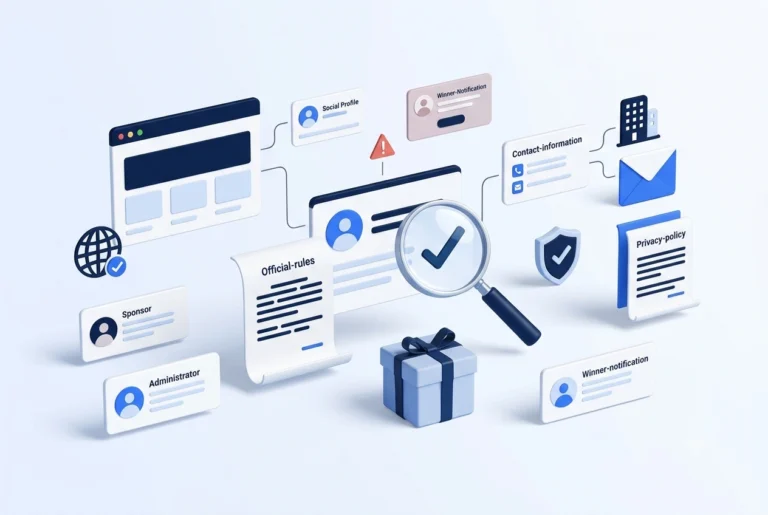
Look for information such as:
- Company or brand name
- Official website
- Contact information
- Privacy policy
- Promotion terms
- Eligibility requirements
Be cautious when a page promises a popular product but provides no clear information about the organization behind the offer.
A familiar product name alone does not prove that the page is operated or authorized by that brand.
For additional checks, read our guide on how to verify a giveaway organizer.
2. Inspect the Website Address Carefully
Before entering personal information, look at the website address.
Scam and imitation pages may use domains that appear similar to a real company’s website.
For example, they might:
- Add extra words to a brand name
- Use unusual spelling
- Replace letters with numbers
- Use an unrelated domain
- Send visitors through several unexplained redirects
A professional-looking design does not make a website legitimate.
When a free sample claims to come directly from a well-known company, compare the promotion with information available through the company’s official website or official social channels where practical.
Do not rely only on a logo displayed on the sample page.
3. Be Suspicious of Unrealistic Claims
Free samples are usually limited promotional products, trial sizes, coupons, or small quantities intended to introduce consumers to a product.
Be cautious when an offer promises something unusually valuable for almost no effort.
Examples of claims that deserve extra scrutiny include:
- Expensive electronics presented as a “free sample”
- Large cash rewards for requesting a sample
- Guaranteed high-value products for everyone
- Luxury items offered with no meaningful terms
- Claims that thousands of dollars of products are being given to every applicant
An attractive offer is not automatically fake, but the more unusual the promise, the more carefully you should verify it.
4. Understand the Difference Between Free and Free Plus Shipping
Some legitimate promotions provide the product at no cost but require the participant to pay shipping or handling.
This does not necessarily mean the offer is fraudulent.
However, the cost should be disclosed clearly.
Before submitting an order, check:
- Shipping cost
- Handling fees
- Taxes
- Recurring charges
- Membership requirements
- Automatic renewal terms
- Cancellation conditions
A product advertised as “free” can become expensive if the page quietly enrolls the customer in a recurring subscription.
Never assume that “free sample” automatically means the entire transaction costs $0.
5. Look for Hidden Subscription Terms
One of the most important checks is whether requesting the sample also starts a subscription or recurring billing agreement.
Read the text close to:
- The payment button
- Checkout form
- Terms and conditions
- Shipping information
- Trial information
Watch for phrases such as:
- Membership
- Auto-renewal
- Recurring shipment
- Monthly delivery
- Subscription
- Trial period
- Cancel before
- Future billing
If recurring charges are part of the offer, they should be understood before you proceed.
Do not submit payment information until you know exactly what you are authorizing.
6. Question Requests for Unnecessary Sensitive Information
A sample promotion may reasonably request information needed to determine eligibility or deliver the product.
This can include details such as:
- Name
- Email address
- Country
- Mailing information
But think carefully when an ordinary free sample asks for information that appears unrelated to fulfillment.
For example, be cautious about requests for highly sensitive financial credentials, account passwords, security codes, or other information that the promotion does not reasonably need.
You should never provide an email password, banking password, or social-media password simply to receive a free sample.
If you want to understand why legitimate promotions commonly request email addresses, see Why Do Giveaways Ask for Your Email?
7. Read the Privacy Policy Before Sharing Your Information
Free samples are often part of marketing campaigns.
That means the organizer may collect information for fulfillment, analytics, advertising, or future marketing, depending on the campaign and applicable terms.
Before submitting your information, check whether the page explains:
- Who collects the information
- How it may be used
- Whether marketing emails are involved
- Whether data may be shared with other parties
- How privacy requests can be made
Avoid assuming that requesting a free sample means you are agreeing only to product delivery.
Understand what you are agreeing to first.
8. Do Not Trust an Offer Just Because It Appears on Social Media
A promotion appearing on Facebook, Instagram, TikTok, X, YouTube, or another social platform is not automatically verified.
Fraudulent advertisements and impersonation accounts can appear on major platforms.
Before following a social-media free-sample promotion:
- Check the account carefully
- Review its posting history
- Look for links to the official company
- Compare the offer with the company’s official website
- Be cautious of recently created or suspicious accounts
- Avoid sending passwords or payment credentials through private messages
The same principle applies to giveaway promotions.
For more information, read Are Social Media Giveaways Safe?
9. Watch for Pressure Tactics and Fake Urgency
Some legitimate promotions have limited quantities or deadlines.
However, aggressive pressure tactics can be a warning sign.
Examples include:
- “Claim in 30 seconds or lose everything”
- Constant countdown timers that restart
- Claims that only one sample remains every time you visit
- Pop-ups saying dozens of people are claiming the exact same item
- Threats that your eligibility disappears unless you provide payment immediately
A real deadline can be verified through the promotion details.
Artificial urgency is designed to stop people from examining the offer carefully.
Take enough time to understand what you are submitting.
10. Search for Independent Information When Something Looks Wrong
When you are uncertain about an offer, perform additional research before entering.
Useful searches may include:
- Brand name + free sample
- Website name + reviews
- Company name + sample promotion
- Offer name + scam
You can also look for the promotion on the organizer’s official website.
Be careful with reviews as well. A few positive comments do not automatically confirm legitimacy, because online reviews can be inaccurate, manipulated, outdated, or unrelated to the specific promotion.
Use multiple signals rather than relying on one review.
11. Check Whether the Offer Explains Eligibility
Legitimate promotions often have restrictions.
These may include:
- Country or region
- Minimum age
- Household limits
- Product availability
- One request per person
- Promotion period
- Limited stock
An offer that provides no eligibility information whatsoever deserves additional scrutiny, particularly when it claims to distribute a valuable product worldwide.
Before applying, check whether you actually qualify.
WorldFreePrizes also provides a dedicated guide to giveaway eligibility requirements.
12. Leave the Page If Something Does Not Feel Consistent
You are never required to complete a free sample form.
If something changes unexpectedly during the process, stop and review the offer again.
For example:
- A free sample suddenly requires an expensive purchase
- The website redirects to an unrelated company
- The product changes during checkout
- Unexpected recurring charges appear
- The page begins requesting unrelated sensitive information
- The organizer information does not match the advertised brand
It is better to miss a sample than to submit information to an offer you do not understand.
Common Warning Signs of a Fake Free Sample Offer
No single warning sign proves that an offer is fraudulent, but several warning signs together should make you cautious.
Common examples include:
- No identifiable organizer
- Suspicious or misleading domain
- Poorly explained fees
- Hidden subscription conditions
- Unrealistic product value
- Requests for account passwords
- No privacy information
- Fake countdown timers
- Unexplained redirects
- Brand impersonation
- No meaningful eligibility information
- Pressure to act immediately
The safest approach is to verify the organizer, understand the terms, and know exactly what information or payment you are providing.
Are Free Samples That Charge Shipping Legitimate?
Sometimes.
A company may genuinely provide a sample for free while asking the participant to cover shipping or handling costs.
The important issue is transparency.
Before paying, make sure you know:
- The exact amount being charged.
- Whether it is a one-time payment.
- Whether a subscription begins afterward.
- How cancellation works, if applicable.
- Which company will appear on the payment statement.
If these points are unclear, investigate further before continuing.
What Should You Do If You Already Submitted Information?
If you submitted basic information such as your name and email address to an offer you later became unsure about, monitor future communications carefully.
Do not click suspicious links sent afterward.
If you created an account and reused a password that you also use elsewhere, change the reused password and use unique passwords going forward.
If you authorized a payment, review the transaction and any applicable recurring billing terms through the appropriate payment provider or financial institution.
The appropriate response depends on what information you provided and what you agreed to.
How WorldFreePrizes Handles Free Sample Listings
WorldFreePrizes is designed to help users discover giveaways, free samples, coupons, and free trials while providing useful information about the opportunity.
When reviewing a listing, users should still check the external offer before participating because promotions can:
- Expire
- Change terms
- Reach their available quantity
- Change eligibility
- Move to a different webpage
- Become unavailable in certain regions
Use WorldFreePrizes as a discovery and research resource, then review the current official offer before submitting your information.
You can browse additional opportunities through the Free Samples section.
For broader fraud-awareness guidance, also read How to Spot a Fake Giveaway.
Frequently Asked Questions
How can I tell if a free sample offer is legitimate?
Identify the organizer, inspect the domain, review the terms and privacy policy, understand all fees, and compare the promotion with official company sources where possible. Avoid relying on the appearance of the website alone.
Are free samples really free?
Some are completely free. Others may require shipping or handling charges. Always check the complete offer terms before submitting your request.
Is it normal for a free sample to ask for my email address?
Yes, many legitimate promotions use email for confirmation, fulfillment updates, or marketing where permitted. However, you should understand the privacy and marketing terms before submitting your email.
Should I give my credit card details for a free sample?
Only after clearly understanding why payment details are required and whether any shipping, subscription, trial, or recurring charges apply. If the payment terms are unclear, do not continue until you understand them.
Are social media free sample advertisements safe?
Some are legitimate, but appearing on a social platform does not verify an offer. Check the advertiser, destination website, organizer, and terms independently.
What is the biggest warning sign of a fake sample?
There is no single universal warning sign. A combination of unclear organizer information, unrealistic promises, hidden charges, suspicious domains, and unnecessary requests for sensitive information should make you especially cautious.
Can a legitimate free sample have limited availability?
Yes. Many sampling campaigns have limited inventory, regional restrictions, household limits, or specific promotion periods.
What should I do before requesting any free sample?
Confirm the organizer, check eligibility, read the terms, understand fees, review the privacy policy, and make sure the website requesting your information is the website you intended to visit.
Final Checklist Before Requesting a Free Sample
- ✅ Do I know which company is providing the sample?
- ✅ Does the website address look legitimate?
- ✅ Do I understand the eligibility requirements?
- ✅ Do I know whether shipping costs anything?
- ✅ Have I checked for recurring subscription charges?
- ✅ Does the requested information make sense?
- ✅ Have I reviewed the privacy information?
- ✅ Is the offer realistic?
- ✅ Am I being pressured unnecessarily?
- ✅ Do I understand exactly what happens after I submit?
If you cannot answer these questions confidently, investigate the offer further before proceeding.
Conclusion
Learning how to avoid fake free sample offers does not require assuming that every promotion is suspicious.
Instead, use a consistent verification process.
Check who is behind the offer, inspect the website, understand all costs, read subscription and privacy terms, avoid unnecessary sensitive-data requests, and verify unusual claims before participating.
A few minutes of checking can help you distinguish a straightforward promotional sample from an offer that deserves more caution.
Continue exploring verified free sample opportunities on WorldFreePrizes, and always review the current external offer before submitting your information.
Continue Exploring Related Guides
Explore closely related WorldFreePrizes guides selected by Guide Category and specific editorial topic. Generic keyword overlap alone is intentionally ignored.