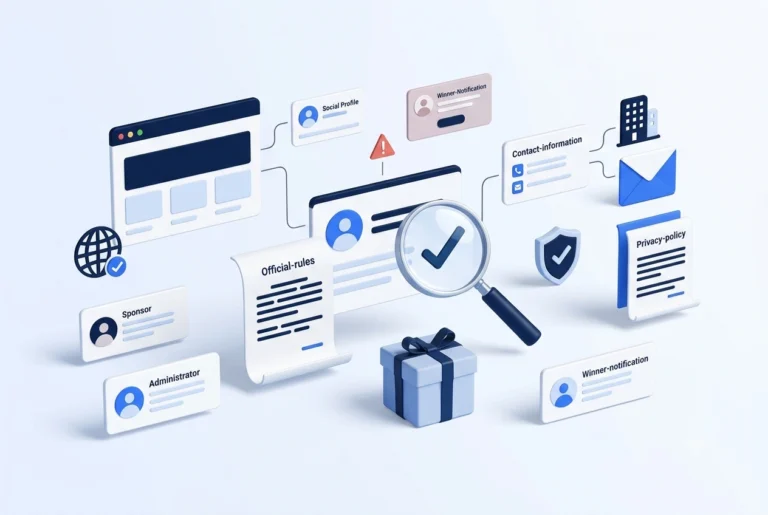
Are social media giveaways safe? Many of them can be legitimate promotions run by brands, retailers, creators, publishers, and other organizations. But social media also makes it easy for scammers to copy profiles, impersonate real businesses, send fake winner messages, and direct entrants to malicious websites.
The biggest risk is often not the original giveaway itself. A legitimate giveaway post can attract impersonator accounts that watch the comments and then contact entrants pretending to be the organizer.
That means entering safely requires more than checking whether the prize looks believable. You should verify the organizer, understand the entry rules, protect your personal information, and carefully inspect any message claiming that you won.
This guide answers are social media giveaways safe and provides 12 practical safety tips to help you participate with greater confidence.
Are Social Media Giveaways Safe?
Social media giveaways can be safe when they are run by a legitimate organizer, have clear rules, use reasonable entry requirements, and follow a verifiable winner-selection and notification process.
However, no giveaway should be considered legitimate simply because it appears on a popular social platform.
Potential risks include:
- Impersonator accounts.
- Fake winner direct messages.
- Phishing links.
- Requests for unnecessary personal information.
- Requests for payment to claim a prize.
- Copied giveaway posts.
- Fake brand accounts.
- Malicious websites.
- Account takeover attempts.
The Federal Trade Commission has specifically warned consumers about scammers hijacking or imitating legitimate social media giveaways to obtain financial or personal information.
The safest approach is to evaluate the organizer, promotion, entry method, and winner notification separately.
1. Verify Who Is Running the Giveaway
Start with the organizer.
A professional-looking profile photo, logo, username, or post design does not prove that an account belongs to the real company or creator.
Before entering, inspect the profile itself.
Look for signs such as:
- A consistent posting history.
- Links to an official website.
- Normal interaction with followers.
- Contact information that matches the organization’s website.
- A history of legitimate promotions or business activity.
- Consistent branding across official channels.
A newly created profile with almost no history that suddenly offers an expensive prize deserves additional scrutiny.
Do Not Rely Only on a Verification Badge
A verification indicator can provide context, but it should not be your only check.
Account verification systems and eligibility for badges can differ between platforms and can change over time.
Instead, confirm the account through several signals, especially the organization’s official website and known communication channels.
2. Watch for Impersonator Accounts
Impersonation is one of the most important social media giveaway risks.
A scammer may copy:
- The organizer’s profile photo.
- Biography.
- Recent posts.
- Brand colors.
- Giveaway image.
- Account name.
Then the scammer creates a username that looks almost identical to the legitimate account.
For example, an impersonator may add:
- An extra letter.
- An underscore.
- A period.
- A number.
- A slightly different spelling.
These small changes can be easy to miss when you are excited about a supposed prize.
Compare the Account With the Original Giveaway Post
If someone contacts you saying that you won, return to the original giveaway post yourself.
Open the organizer’s profile directly from that known post and compare it with the account sending the winner message.
Do not assume two accounts are the same merely because they use identical logos and images.
3. Find the Official Giveaway Rules
Clear rules are one of the strongest pieces of information available when evaluating a promotion.
Depending on the giveaway, the rules may be located:
- On the organizer’s website.
- On a dedicated promotion page.
- Through a link in the social media post.
- On a campaign landing page.
- Within clearly presented giveaway terms.
Look for information about:
- Who sponsors the giveaway.
- Who may enter.
- Eligible countries or regions.
- Minimum age.
- Start and end dates.
- How to enter.
- Entry limits.
- Prize details.
- How winners are selected.
- How winners are contacted.
Our guide to official sweepstakes rules explains the most important sections to review.
4. Check Whether the Entry Requirements Make Sense
Social media promotions often use simple actions as part of their entry process.
Depending on the promotion, entrants might be asked to:
- Follow an account.
- Like a post.
- Leave a comment.
- Answer a question.
- Tag another account.
- Submit a photo or video.
- Complete an external entry form.
The exact requirements vary, and platform rules can also affect how promotions are structured.
The important question is whether the requested actions are consistent with the official giveaway instructions.
Be Cautious When the Requirements Suddenly Change
Suppose the original giveaway asks you only to follow an account and leave a comment.
Later, another profile sends you a message saying you must provide your banking information to “complete your entry.”
That major change should make you stop and verify the message.
A winner claim should make sense when compared with the original promotion.
5. Never Assume a Winner Comment Is Genuine
Fake winner comments are common enough that entrants should treat them carefully.
You might receive a reply beneath your comment saying:
“Congratulations! You have been selected. Message us now.”
The fact that the reply appears directly below the real giveaway post does not mean it was written by the real organizer.
Scammers can monitor public giveaway comments and respond to participants from impersonator accounts.
Verify Before Following Instructions
Before responding:
- Open the account that posted the winner comment.
- Compare its username with the original organizer.
- Check its profile history.
- Return to the original giveaway rules.
- Check how the rules say winners will be contacted.
If the rules say winners will be contacted by email, an unexpected comment from another account should receive additional scrutiny.
6. Treat Direct Messages Carefully
Direct messages are a legitimate communication method for some social media giveaways, but they are also convenient for scammers.
A DM claiming that you won should be verified before you click links or provide information.
Check:
- The exact username.
- The account history.
- The original giveaway post.
- The stated winner-selection date.
- The notification method in the official rules.
- Whether you actually entered the giveaway.
Did You Actually Enter?
This simple question can expose many scams.
If you receive a message congratulating you on winning a promotion you never entered, treat it as a major warning sign.
Keep basic records of giveaways you enter so that future winner notifications are easier to verify.
See How Giveaway Winners Are Contacted for a complete explanation of legitimate notification methods.
7. Do Not Click Suspicious Winner Links
A fake winner message may attempt to move you away from the social platform to a phishing or malicious website.
The destination may imitate:
- A brand website.
- A prize-claim portal.
- A delivery company.
- A payment page.
- A social media login screen.
Before opening a link, consider whether you can reach the expected page independently.
Navigate Independently When Possible
If a message claims to come from a known company, open the company’s official website yourself rather than relying entirely on an unexpected link.
The FTC has warned that links sent through fraudulent giveaway messages may be used to obtain personal information or expose users to malware.
For additional consumer guidance, see the FTC guidance on social media giveaway scams.
8. Never Pay to Claim a Supposed Sweepstakes Prize
This is one of the strongest warning signs.
A scammer may claim that you have won but must first pay for:
- Processing.
- Shipping.
- Handling.
- Insurance.
- Customs.
- Prize release.
- Administrative charges.
- Supposed taxes paid directly to the sender.
According to the FTC, real sweepstakes prizes are free, and demands to pay to receive a supposed prize are a hallmark of prize scams.
Be particularly cautious if someone tells you to pay using:
- Gift cards.
- Cryptocurrency.
- Wire transfers.
- Cash.
- Payment apps.
Do not let a countdown or “claim immediately” message pressure you into paying.
9. Protect Your Personal Information
A legitimate giveaway may require some personal information.
Basic entry information can include:
- Name.
- Email address.
- Age confirmation.
- Country.
- Postal code.
A potential winner may later need to provide additional verified information for eligibility or prize fulfillment.
But you should not automatically provide sensitive information simply because someone sends you a social media message.
Be Extremely Careful With Account Security Information
Never give a supposed giveaway organizer:
- Your social media password.
- Your email password.
- One-time login codes.
- Authentication codes.
- Recovery codes.
- Banking passwords.
- Card PINs.
A request for login credentials or one-time security codes can indicate an attempt to take control of your account.
Why Giveaways Ask for Email
An email address can be a legitimate entry or winner-contact requirement, but you should understand how it may be used.
See our guide explaining why giveaways ask for your email for privacy and communication considerations.
10. Check the Giveaway Dates Before Trusting a Winner Message
Timing can reveal inconsistencies.
Check:
- When the giveaway starts.
- When it ends.
- When winner selection occurs.
- When winners are expected to be contacted.
If someone claims you won a final drawing before the promotion has even closed, investigate carefully.
The same applies when a giveaway ended long ago and an unrelated account suddenly contacts you without any connection to the original organizer.
Potential Winners May Have Response Deadlines
A legitimate winner notification can still require a timely response.
Verify the message first, then follow the deadline stated by the official promotion.
Do not confuse a legitimate response deadline with artificial scam pressure demanding immediate payment.
11. Review Your Social Media Privacy and Security Settings
Entering public giveaways can make your account more visible.
For example, comments may show scammers that you are actively participating in promotions.
Good account-security practices include:
- Using a strong unique password.
- Enabling available multi-factor authentication.
- Reviewing account recovery information.
- Limiting unnecessary public personal details.
- Reviewing privacy settings.
- Being cautious with unfamiliar direct messages.
- Checking active login sessions where available.
The FTC also recommends reviewing privacy settings to limit what strangers can see through social media accounts.
Do not publish information such as your full home address simply to participate in a public comment-based giveaway unless there is a legitimate and appropriate reason to provide it through a secure private process.
12. Verify the Prize Before Celebrating
Excitement can make people move too quickly.
Before treating yourself as a winner, confirm:
- You entered the giveaway.
- The promotion is legitimate.
- The giveaway has reached its winner-selection stage.
- The contacting account belongs to the organizer or authorized administrator.
- The notification method matches the rules.
- The prize matches what was advertised.
- You have not been asked to make suspicious payments.
Remember that many promotions initially identify someone as a potential winner.
The entrant may still need to satisfy eligibility and verification requirements before being confirmed.
Our guide to how giveaway winners are chosen explains the selection stage in more detail.
How to Verify a Social Media Giveaway Before Entering
Use a simple verification process before participating.
Step 1: Inspect the Organizer
Determine who actually operates the account and whether it corresponds with a real brand, business, creator, organization, or promotion administrator.
Step 2: Check the Official Website
If the organizer has a website, see whether the social account is linked from it or whether the promotion appears on an official page.
Step 3: Find the Rules
Review eligibility, deadlines, entry limits, prize details, and winner notification.
Step 4: Examine the Entry Method
Make sure the requested actions match the promotion description.
Step 5: Evaluate the Prize
A valuable prize does not automatically make a giveaway fake, but extraordinary claims from an unknown account deserve additional verification.
Step 6: Save the Original Giveaway
Bookmark the official page or save enough information to verify a future winner notification.
How to Spot a Fake Social Media Giveaway Account
No single sign proves that an account is fake, but several warning signs together can be useful.
Look closely when an account has:
- A username almost identical to a known brand.
- Very little account history.
- Only a handful of recent posts copied from another profile.
- An unusual external link.
- No connection to an official company website.
- Repeated winner comments sent to many entrants.
- Messages demanding financial information.
- Requests for payment before receiving a prize.
- Requests for passwords or security codes.
For additional warning signs across all types of promotions, read How to Spot a Fake Giveaway: 12 Warning Signs.
Is a Giveaway Safe Because a Famous Brand Is Mentioned?
No.
Scammers can use the names, logos, product photos, or copied promotional material of well-known companies without authorization.
A post claiming that a famous company is giving away expensive products should be verified through the company’s genuine channels.
Do not assume that a brand participates merely because its name appears in:
- The account name.
- A hashtag.
- The giveaway image.
- A direct message.
- A copied logo.
Are Influencer Giveaways Safe?
They can be legitimate, but the same safety principles apply.
Check:
- Whether the giveaway appears on the creator’s established account.
- Whether the rules or conditions are clear.
- Whether the prize and entry method are explained.
- Whether winner selection and notification are described.
- Whether an impersonator account contacts entrants afterward.
The size of an account’s audience is not, by itself, proof that a particular winner message is authentic.
Are Instagram Giveaways Safe?
Instagram giveaways can be legitimate, but entrants should watch for copied profiles, fake winner comments, direct-message scams, and suspicious links.
Return to the original organizer’s profile when verifying any notification rather than trusting the profile that contacted you.
The same principle applies to promotions hosted on other social platforms.
Are Facebook Giveaways Safe?
Legitimate businesses and organizations can use Facebook to promote giveaways, but fraudulent accounts and copied posts also exist.
Verify the Page or profile, read the promotion terms, and avoid providing financial information through an unexpected winner message.
Do not assume a giveaway is legitimate merely because friends have shared it.
Are TikTok Giveaways Safe?
Giveaways promoted through short-form video platforms can also be legitimate, but viral reach can make copied promotions spread quickly.
Check the creator or company’s authentic account, the promotion’s terms, the external link destination, and the stated winner-notification method before participating.
What Should You Do if a Fake Giveaway Account Contacts You?
If you believe an account is impersonating a giveaway organizer:
- Do not send money.
- Do not provide passwords or security codes.
- Do not click suspicious links.
- Take screenshots if useful for reporting.
- Report the impersonator through the social platform’s available reporting tools.
- Notify the legitimate organizer through a trusted contact channel when appropriate.
- Delete or block suspicious messages after preserving anything needed for reporting.
If you already provided sensitive information, take appropriate security steps for the affected account or payment method promptly.
What If You Already Clicked a Suspicious Giveaway Link?
The appropriate response depends on what happened after clicking.
If you entered a password on a suspicious page, change that password through the real service and review your account security.
If the same password was reused elsewhere, change it on those accounts as well.
If you provided payment or financial information, contact the relevant financial provider using trusted contact information.
If you downloaded an unknown file, avoid opening it and use appropriate device-security tools.
Do not continue communicating with the sender simply because information has already been shared.
Social Media Giveaway Safety Checklist
Before entering or responding to a winner message, check all 12 points:
- Organizer: Can you verify who is running the giveaway?
- Account: Is it the authentic profile rather than an impersonator?
- Rules: Can you find understandable promotion rules or terms?
- Entry method: Do the requested actions match the original giveaway?
- Winner comment: Have you verified the account replying to you?
- Direct message: Does the sender match the organizer?
- Links: Are you avoiding suspicious or unexpected links?
- Payment: Has anyone asked you to pay to release a prize?
- Information: Are you protecting passwords and security codes?
- Timing: Does the winner message fit the giveaway schedule?
- Account security: Are your privacy and security settings appropriate?
- Prize verification: Have you independently confirmed the win?
Frequently Asked Questions
Are social media giveaways safe?
Social media giveaways can be legitimate, but safety depends on the organizer, rules, entry process, and winner notification. Entrants should verify accounts carefully because scammers can impersonate legitimate organizers.
How can I tell if a social media giveaway is real?
Verify the organizer through its official website or established account, look for clear giveaway terms, inspect the entry requirements, check the dates, and independently verify any winner message.
Why do fake accounts contact giveaway entrants?
Public giveaway posts make it easy for scammers to identify people interested in winning. An impersonator may then pretend that an entrant won in order to obtain money, personal information, login credentials, or clicks on malicious links.
Is it safe to click a giveaway link on social media?
Not automatically. Check who posted the link and where it leads. If a winner link arrives unexpectedly, consider navigating independently to the organizer’s official site rather than relying on the message.
Can a real giveaway contact me through a direct message?
Yes. Some promotions legitimately use direct messages. Compare the sender with the authentic organizer and check whether the official rules describe social media messaging as a winner-notification method.
Should I pay shipping to receive a social media giveaway prize?
An unexpected request to pay money to release a supposed sweepstakes prize is a major scam warning sign. The FTC advises that real sweepstakes prizes are free.
Can fake accounts copy verified brands?
Scammers can copy names, profile pictures, logos, biographies, and giveaway posts. Always inspect the actual account rather than relying on visual branding alone.
Is it safe to give my email address to a social media giveaway?
An email address can be a normal entry or winner-contact requirement. However, verify the organizer, review how the information will be used, and avoid providing unnecessary sensitive information.
Can a giveaway ask for my home address?
A legitimate organizer may eventually need a mailing address for eligibility verification or physical prize delivery. Verify that you are communicating with the genuine organizer before providing it.
What should I do if a fake giveaway account says I won?
Do not pay, click suspicious links, or provide passwords or financial credentials. Verify the original organizer independently and report the impersonator through the platform when appropriate.
Final Takeaway
So, are social media giveaways safe? They can be, but participating safely requires more than trusting a familiar logo, attractive prize image, or enthusiastic winner message.
Verify the organizer, find the official rules, understand the entry requirements, and pay particular attention to accounts that contact entrants after a giveaway post becomes popular.
Impersonator accounts can copy a legitimate business’s profile and use fake winner comments or direct messages to request money, personal information, or clicks on suspicious websites.
Never provide passwords or authentication codes, and treat any demand for payment to release a supposed sweepstakes prize as a serious warning sign.
The best social media giveaway safety habit is simple: verify the promotion independently before entering and verify the winner notification again before responding.
Continue with our guides to how to spot a fake giveaway, how giveaway winners are contacted, official sweepstakes rules, and giveaway eligibility requirements.