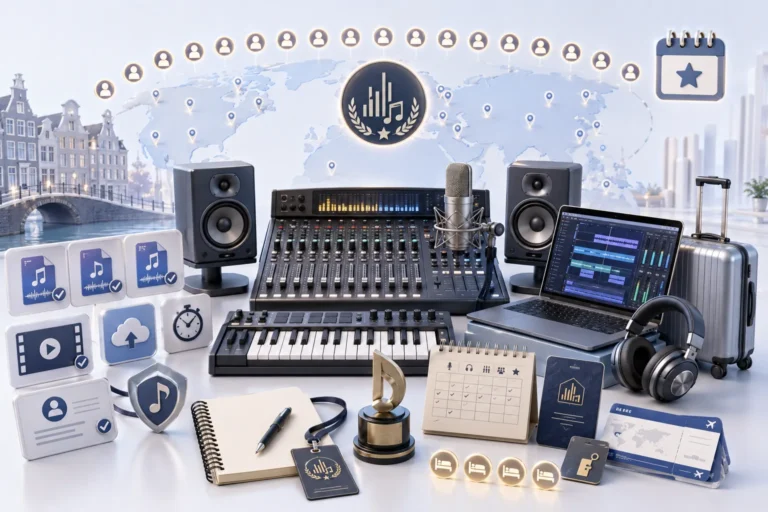
What Are Music Demo Submission Giveaways?
Music demo submission giveaways are competitions and creative promotions that require participants to submit an original song, instrumental track, composition, performance recording, remix, production demo, or another form of musical work.
These opportunities may be organized by music companies, record labels, festivals, equipment brands, studios, publishers, educational organizations, streaming platforms, and other third-party promoters.
WorldFreePrizes helps visitors discover manually reviewed music demo submission competitions with useful information about prizes, eligible countries, accepted genres, track limits, audio requirements, judging criteria, submission deadlines, usage rights, and official entry links.
How Music Demo Submission Competitions Work
The organizer normally publishes a creative brief explaining what type of music may be submitted. Participants may need to upload an audio file, provide a private streaming link, submit a music video, complete an online form, or send supporting information about the track.
Entries may be evaluated by music professionals, producers, artists, label representatives, educators, sponsors, public voters, or another judging group described in the official rules.
Music Competitions and Random Giveaways
Most music demo opportunities are skill-based competitions rather than random sweepstakes. Winners may be selected according to songwriting, originality, production quality, performance, technical ability, emotional impact, commercial potential, or relevance to the assigned theme.
Some promotions may randomly select a winner from all eligible music submissions. Review the official selection section to understand whether the result is based on judging, voting, random selection, or a combination of methods.
Types of Music Demo Submissions
- Original songs with vocals
- Instrumental compositions
- Electronic music productions
- Hip-hop and rap demos
- Rock, pop, indie, and alternative recordings
- Classical and contemporary compositions
- Film, television, and game music
- Remixes and reinterpretations
- Live performance recordings
- Music videos and visual performances
- Songwriting demos
- Short audio themes and jingles
Read the Music Competition Brief
The competition brief may specify the required genre, theme, mood, instrumentation, duration, language, audience, production style, or intended use of the music.
Review every mandatory requirement before recording or submitting. A technically strong track may still be rejected when it does not follow the assigned theme or format.
Accepted Music Genres
Some competitions accept music from any genre, while others focus on a specific style such as pop, electronic, classical, hip-hop, rock, jazz, folk, country, ambient, film scoring, or experimental music.
Check whether the organizer provides separate categories and whether each participant may enter more than one genre.
Original Music Requirements
Most music demo competitions require original work created by the participant or authorized team. The submission should not violate another person’s copyright, publishing rights, performance rights, recording rights, or other intellectual-property interests.
Keep original project files, recording sessions, lyrics, stems, composition notes, and production records when possible. The organizer may request evidence that the music was created by the participant.
Previously Released Music
Some competitions accept music that has already been published, streamed, performed, or distributed. Others require unreleased material that has not appeared publicly or commercially before the submission deadline.
Check whether previous release, label distribution, awards, licensing, commercial use, radio play, or entry into another competition affects eligibility.
Songwriting Demo Requirements
A songwriting competition may accept a simple voice-and-instrument recording, studio production, lyric sheet, lead sheet, or another demonstration of the song.
Professional production may not always be required. Focus on presenting the melody, lyrics, structure, and musical idea clearly while following the organizer’s technical instructions.
Instrumental Music Submissions
Instrumental competitions may accept orchestral music, electronic productions, beats, ambient tracks, jazz performances, soundtrack cues, or other music without vocals.
Review whether the organizer requires sheet music, stems, project files, a written description, or information about the instruments and software used.
Remix Competitions
Remix competitions may provide official stems, vocals, samples, or project materials that participants are permitted to use. The submitted remix must normally follow the organizer’s rules regarding length, genre, distribution, and use of supplied content.
Use only the files provided or expressly permitted by the organizer. Do not add unauthorized copyrighted samples or release the remix commercially unless the rules allow it.
Samples, Loops, and Third-Party Audio
Participants should confirm that they have permission to use every sample, loop, beat, sound effect, vocal recording, or other third-party element included in the track.
Royalty-free material may still have restrictions on redistribution, commercial use, isolated use, or participation in competitions. Review the license terms and retain proof of permission.
Cover Songs and Arrangements
Some competitions allow cover songs, arrangements, or reinterpretations of existing music, while others accept only completely original compositions.
A cover recording may involve rights belonging to the songwriter, publisher, performer, or recording owner. Enter only when the official rules clearly permit this type of submission.
Lyrics and Language Requirements
Music competitions may accept lyrics in one language, several languages, or any language accompanied by a translation. The organizer may request a typed lyric sheet or explanation of the song’s meaning.
Check the content restrictions and make sure the submitted lyrics match the recorded version.
Explicit and Restricted Content
Organizers may reject music containing unlawful material, hate, harassment, threats, explicit sexual content, unauthorized advertising, misleading claims, or other content prohibited by the official rules.
Some competitions may request a clean version without explicit language. Review the intended audience and content requirements before submitting.
Audio File Formats
The official rules may specify accepted formats such as MP3, WAV, AIFF, FLAC, M4A, or another supported audio format.
Export the track using the requested file type, sample rate, bit depth, and compression settings. Test the final file before submitting it.
Audio Quality Requirements
Some competitions request a high-quality uncompressed recording, while others accept a smaller compressed demo file. The organizer may set requirements for sample rate, bit depth, loudness, file size, mono or stereo format, and mastering.
Avoid excessive clipping, distortion, background noise, or volume differences that make the music difficult to evaluate.
Track Length and Duration Limits
Music submissions may have minimum or maximum duration limits. Some competitions accept full-length songs, while others request a short demo, excerpt, theme, commercial cue, or performance clip.
Check whether introductions, silence, spoken explanations, or credits count toward the permitted duration.
Number of Tracks Allowed
An organizer may permit one track per participant, several separate entries, a maximum number of demos, or one submission per category.
Do not submit more tracks than allowed. Additional entries may need to be substantially different and independently eligible.
File Names and Metadata
The organizer may require a specific file-naming format containing the participant’s name, track title, category, entry number, or another identifier.
Check whether audio metadata should include artist information or remain anonymous for judging. Do not add prohibited promotional links or contact details.
Direct Audio File Uploads
Some competitions allow participants to upload the audio file directly through an official entry form. Large, high-quality files may require additional upload time.
Use a stable internet connection, start the upload early, and keep the page open until a confirmation message appears.
Submitting a Private Streaming Link
Some organizers request a private or unlisted streaming link instead of a direct file upload. The link may need to remain accessible without requesting additional permission.
Test the link in a private browser window and confirm that it does not expire before the judging period ends.
Public Music Platform Submissions
A competition may ask participants to submit a public link from an approved music or video platform. Privacy settings, regional availability, advertising, account restrictions, or deleted content may prevent judges from accessing the entry.
Keep the track available and avoid changing the link until the competition and verification process are complete.
Email Music Demo Submissions
Some music opportunities accept demos by email. The organizer may request a specific subject line, audio attachment, streaming link, artist biography, lyrics, photograph, or supporting documents.
Follow the file-size limits and submission instructions exactly. Sending large unsolicited attachments may cause the message to be rejected.
Online Entry Forms
In addition to the audio file or link, the entry form may request the track title, artist name, genre, country, age, biography, lyrics, songwriting credits, production credits, social media links, or explanation of the musical concept.
Complete every required field accurately. The supporting information may be considered during eligibility review or judging.
Artist Biography and Supporting Information
Some competitions request a short biography describing the participant’s background, influences, experience, achievements, or creative goals.
Keep the biography relevant and within the stated word or character limit. Do not include inaccurate awards, false professional claims, or unrelated promotional material.
Songwriting and Production Credits
List all writers, composers, producers, performers, engineers, and collaborators when required. The organizer may request each contributor’s legal name, professional name, role, and ownership percentage.
Incomplete or inaccurate credits may create eligibility or rights issues during winner verification.
Collaborative Music Entries
Some competitions accept bands, production teams, songwriting partnerships, and other collaborative entries. A designated representative may need authority to submit the work and accept the official rules on behalf of the group.
Confirm that every contributor agrees to the submission, rights terms, judging process, and possible use of the music.
Band and Group Eligibility
Competitions may apply separate requirements to individual artists, bands, duos, ensembles, or production teams. All members may need to meet the age, residency, and professional-status requirements.
Review how the prize will be awarded or divided between members before entering.
Label, Publisher, and Management Restrictions
Some opportunities are intended for independent or unsigned artists. Participants with an existing recording contract, publishing agreement, management agreement, distribution deal, or exclusive licensing arrangement may be restricted.
Review existing agreements and confirm that you have authority to submit the music and grant the required rights.
Student and Emerging Artist Categories
Some music competitions include categories for students, young artists, emerging performers, independent producers, or creators below a particular level of professional experience.
The organizer may require proof of enrollment, age, career status, or educational affiliation.
Age and Residency Requirements
Participants must satisfy the minimum age and residency requirements stated in the official rules. Some competitions are worldwide, while others are limited to selected countries, regions, schools, organizations, or music communities.
Participants below the required adult age may need permission from a parent or legal guardian.
Worldwide Music Competitions
Some music demo competitions accept entries from artists in many countries. However, the word “worldwide” does not always mean that every country and territory is eligible.
Review the complete eligibility section and confirm that the prize, payment method, travel opportunity, recording service, or equipment can be provided in your location.
Entry Fees and Free Music Competitions
Many music demo competitions are free to enter. Others may require an entry fee, membership, event registration, course enrollment, product purchase, or another qualifying action.
Review all costs before submitting. An entry fee does not guarantee selection, feedback, publication, a contract, or a prize.
Submission Deadlines and Time Zones
Music competitions may specify separate deadlines for registration, audio submission, supporting documents, public voting, finalist materials, and winner verification.
The organizer may use a time zone different from your local time. Upload early to allow time for exporting, file conversion, slow connections, and technical problems.
Submission Confirmation
After submitting, look for a confirmation page, reference number, email, account notification, or acknowledgment from the organizer.
Save a copy of the submitted track, entry form, credits, rules, upload link, and confirmation message.
Anonymous Judging
Some competitions use anonymous judging and may prohibit artist names, photographs, contact details, or identifying information inside the audio file or supporting documents.
Follow the naming and metadata instructions carefully to avoid revealing information that should remain hidden from judges.
Judging Criteria
Music demos may be judged according to songwriting, melody, harmony, lyrics, originality, arrangement, performance, production, technical quality, emotional impact, relevance to the theme, audience appeal, or commercial potential.
Review any published scoring percentages and focus on the criteria that carry the greatest importance.
Production Quality and Creative Merit
Some competitions prioritize songwriting or creative ideas rather than professional recording quality. Others expect a polished, mixed, and mastered production.
Read the brief carefully so that you do not spend unnecessary money producing a professional recording when a simple demo is acceptable.
Public Voting
Some music competitions allow listeners to vote for entries. Voting may determine the winner, select finalists, or contribute only part of the final score.
Review the permitted promotion methods and vote limits. Buying votes, using automated systems, creating fake accounts, or offering prohibited incentives may result in disqualification.
Finalists and Additional Materials
Finalists may be asked to provide an uncompressed audio file, instrumental version, vocal-only version, stems, project files, sheet music, lyrics, identification, releases, or another form of verification.
Keep the original production files and all related documentation until the competition ends.
Live Performance Requirements
Some competitions require finalists or winners to perform live, attend an online audition, participate in an interview, or appear at an awards event.
Review the travel, equipment, rehearsal, performance, scheduling, and attendance requirements before entering.
Artificial Intelligence and Generated Music
Some music competitions permit AI-assisted tools, generated audio, synthetic voices, automated composition, or machine-assisted production. Others prohibit these tools or require disclosure.
Check the official rules before using generated content. Keep records of the tools, prompts, source materials, licenses, and human contributions involved.
Ownership of Submitted Music
Some competitions allow participants to retain ownership while granting the organizer a limited license to review and promote the entry. Other opportunities may request broader rights from finalists or winners.
Read the ownership and licensing section carefully before submitting valuable original music.
Licenses Granted to the Organizer
The official rules may allow the organizer to stream, reproduce, edit, translate, synchronize, distribute, publish, promote, or perform the submitted music.
Review whether the license is exclusive or non-exclusive, temporary or permanent, commercial or promotional, worldwide or regionally limited, and whether compensation is provided.
Recording and Publishing Rights
A musical work may involve separate rights in the composition, lyrics, sound recording, arrangement, and performance. Participants should confirm that they control or have permission for every relevant right.
Do not assume that recording or performing a song gives you ownership of the underlying composition.
Prize Recording and Distribution Agreements
Some music competitions offer recording, publishing, distribution, licensing, management, or promotional opportunities. The winner may be asked to sign a separate agreement before receiving these benefits.
Review the agreement carefully and consider obtaining qualified professional advice before accepting obligations involving ownership, exclusivity, royalties, recoupment, or long-term commitments.
Common Music Competition Prizes
- Cash awards
- Recording studio time
- Music production equipment
- Microphones, headphones, and instruments
- Software licenses and audio plugins
- Mixing and mastering services
- Professional mentoring and feedback
- Music distribution and promotional support
- Festival or event performances
- Travel to an awards ceremony
- Scholarships and educational opportunities
- Publishing or synchronization opportunities
Recording Studio Prizes
A studio prize may include a limited number of recording hours, an engineer, selected equipment, mixing, mastering, or another defined service.
Check the studio location, booking period, travel requirements, included services, file delivery, ownership terms, and additional expenses.
Equipment and Software Prizes
Music prizes may include microphones, headphones, instruments, audio interfaces, studio monitors, computers, software, plugins, or subscriptions.
Review product compatibility, supported operating systems, account regions, licensing conditions, warranty coverage, shipping availability, and import expenses.
Travel and Performance Prizes
A winner may receive travel to a festival, studio, conference, concert, awards ceremony, or professional event.
Check whether flights, accommodation, meals, local transportation, guest expenses, insurance, passports, visas, equipment transport, and personal costs are included.
Winner Notification
Finalists and potential winners may be contacted by email, telephone, social media, postal mail, or through the account used to submit the music.
Monitor the contact information used for entry, including spam folders and platform notifications, during the judging period.
Winner Verification
A potential winner may need to provide identification, proof of age and residence, original project files, songwriting credits, contributor releases, sample licenses, publishing information, or confirmation of ownership.
Failure to provide required documentation may result in disqualification or selection of an alternate winner.
Prize Claim Deadlines
Finalists and winners normally have a limited period in which to respond and complete verification. Missing the deadline may result in forfeiture of the prize.
Keep your email address and submission account active until the competition and prize-delivery process are complete.
Taxes and Additional Costs
A winner may be responsible for taxes, travel costs, shipping, import charges, equipment, production expenses, payment fees, registration, or other costs not included with the advertised prize.
Review the official rules. WorldFreePrizes does not provide tax, legal, copyright, publishing, or contract advice.
How to Identify a Legitimate Music Competition
- Submit through the official organizer or authorized platform.
- Read the complete official rules and judging criteria.
- Confirm eligible countries, ages, genres, and deadlines.
- Review audio formats, duration limits, and track limits.
- Understand ownership and licensing requirements.
- Verify the organizer’s identity and previous competitions.
- Confirm how finalists and winners will be contacted.
- Never share passwords, payment PINs, or authentication codes.
- Never provide a cryptocurrency wallet seed phrase or private key.
- Be cautious of guaranteed contracts or unexpected release fees.
Music Demo Submission Scams
Fraudulent opportunities may collect entry fees, music files, personal information, or creative rights without providing a genuine competition or prize.
Warning signs may include guaranteed success, missing rules, unclear judging criteria, excessive rights demands, requests for unusual payments, unofficial communication accounts, or pressure to sign immediately.
Verify the competition through the organizer’s official website and review all rights, prize, privacy, and payment conditions before submitting original music.
Are Music Demo Competitions Free to Enter?
Many music demo submission competitions are free to enter. Others may require an entry fee, membership, event registration, course enrollment, product ownership, or another qualifying action.
WorldFreePrizes provides information about third-party promotions and does not organize, administer, endorse, guarantee, or judge the listed competitions.
Tips for Preparing a Music Demo Submission
- Read the complete rules before recording.
- Choose a track that matches the required category.
- Confirm that all music and samples are authorized.
- Check the duration, file type, and quality requirements.
- Use accurate songwriting and production credits.
- Test every streaming or download link.
- Keep original project files and license records.
- Review the ownership and usage-rights section.
- Submit early and save the confirmation.
- Monitor messages during the judging period.
Browse Current Music Demo Submission Giveaways
Explore current music demo submission competitions and creative opportunities on WorldFreePrizes. Compare prizes, eligible countries, accepted genres, track limits, audio requirements, judging criteria, usage rights, deadlines, and official submission links before entering.
You can also browse video submission contests, explore website entry giveaways, view all current giveaways, or read our giveaway guides and safety advice.